Last updated: November 19, 2026
Key Takeaways
- Freeze the card, lock the phone, and tell a parent or guardian right away.
- Stop the next charge first; sorting out whether it was “really stolen” can wait.
- Secure the phone remotely, then protect every app that can reset money access.
- Tell support the card or phone was stolen, the card needs blocking, and bank activity should be checked.
Quick Answer

Quick answer: within the first 10 minutes, freeze the card, lock the phone, and tell a parent or guardian. A stolen payment device response is mostly a race against minutes, not days, because a phone can open the bank app, texts, and password resets, while a card can be used for tap-to-pay or online purchases until it is frozen.
If someone steals a teen’s debit card or phone, the first move is to lock the money access before the thief can spend a dollar. A stolen payment device response is mostly a race against minutes, not days, because a phone can open the bank app, texts, and password resets, while a card can be used for tap-to-pay or online purchases until it is frozen. For related teen safety steps, see teen money safety and fraud protection basics.
What to do in the first 10 minutes
The fastest response is to freeze the card, lock the phone, and tell a parent or guardian right away. Those 3 moves cut off the most common ways a thief can spend money or reset logins.
- Use the bank app or call customer service immediately. Open the bank app if it is still on a trusted device and freeze the debit card. If the phone was stolen too, call the number on the back of another card, on a statement, or on the bank’s website from a safe device. The result should be that new charges stop or become harder to approve.
- Lock the phone with Find My iPhone or Find My Device. On iPhone, use Find My to mark it as lost; on Android, use Google’s Find My Device. Both tools can lock the screen, show a message, and help keep the thief out of saved apps and texts.
- Change the phone passcode and important passwords from a different device. Start with email, banking, and any app that can move money. If the thief has the phone, the old password may still be sitting in messages or autofill.
- Tell a parent, guardian, or another trusted adult. A teen may not have every login or customer-service script memorized. A second person can help with the bank, the carrier, and proof of identity.
- Write down the time, place, and what is missing. A simple note with the 24-hour time, location, and card type helps when customer service asks for details or when a police report is needed.
This is the point where speed matters more than perfect wording. If the card was used for transit, food delivery, or app payments, freeze it first and sort out the rest after the immediate risk is contained.
For a broader overview of prevention and next steps, the hub on teen money safety and fraud protection can sit beside this guide.
How to lock the card before anyone spends on it
The card should be frozen as soon as the teen knows it is gone, because debit card fraud can happen through contactless payment, online checkout, or by adding the card to a mobile wallet. The goal is to stop the next transaction, not to argue about whether the card was “really stolen” yet.
Open the bank app or online banking from a safe device and look for wording like Freeze card, Lock card, or Report lost or stolen card. Many banks put this in the card section, often beside recent transactions and spending controls. If the app is unavailable, call customer service and ask for the card to be disabled immediately.
A useful rule: if the phone is also missing, do not wait to get back into the app. Use another device and the bank’s customer service line. A stolen phone can carry saved login sessions, but the bank can still block card use.
A teen should also check for these common weak spots:
- Stored card numbers in shopping apps. A thief may not need the physical plastic if the number is saved in Amazon, ride-share apps, delivery apps, or gaming stores.
- Apple Pay or Google Wallet. A lost phone may still be able to make purchases until the device is locked or the wallet is removed.
- Recurring payments. A card can keep feeding subscriptions until the bank cancels it or issues a replacement.
One limitation matters here: freezing a card does not erase fraud that already happened. It only stops the next charge. The teen still needs to review transactions and report any unauthorized use through the bank’s process. That part matters because some banks handle card disputes differently for debit cards than for credit cards, and the timing of the report can affect the case.
If the bank asks for a reason, say plainly: “My debit card was stolen, and I need it blocked now.” That sentence gets the job done faster than a long explanation.
What to do if the phone was stolen too
The phone should be locked remotely first, then the teen should protect every app that can reset money access. A stolen phone is not just a device problem; it is a password problem, a text-message problem, and sometimes a payment problem.
On iPhone, use Find My from another Apple device or a browser to mark the phone as lost. On Android, use Find My Device. These tools can show a location if the phone is online, but the main job is to keep the person who took it from opening messages, email, or banking apps.
Then change these passwords, in this order:
- Banking app
- Apple ID or Google account
- Social media
- Shopping and delivery apps
- Any app with stored payment methods
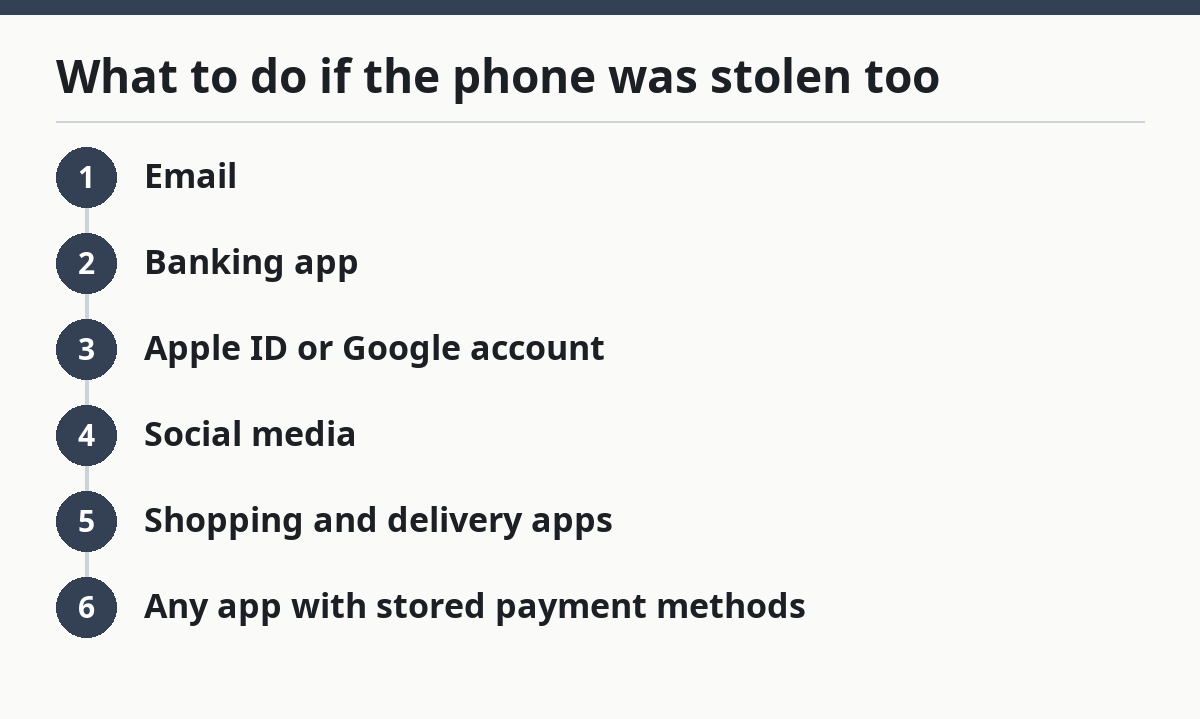
Email comes first because password-reset links usually land there. If the thief can open the inbox, they can often walk into the rest of the teen’s accounts.
The teen should also call the mobile carrier and ask for the SIM or line to be suspended if the phone has not been recovered. A stolen SIM can be used for text-message verification, and that can help a thief get into banking or shopping apps that still trust SMS codes. If the carrier asks for the IMEI or account details, a parent or guardian may need to handle the call.
A common mistake is assuming a screen passcode is enough. It helps, but it does not protect every app once the phone is opened, and it does not stop notification previews, saved passwords, or one-tap sign-ins already on the device.
This is also where a teen should stop using the stolen phone’s saved browser sessions to “just check one thing.” That can give the thief more time if the device is still active somewhere else. Use a different device, change passwords, and sign out of sessions where possible.
What to say to the bank and customer service
The teen should say the basics clearly: the card or phone was stolen, the card needs to be blocked, and the bank app should be checked for unauthorized activity. Customer service handles this faster when the call starts with the right facts instead of a long story.
Have these details ready before calling or messaging support:
- Full name on the card
- Last 4 digits of the debit card
- Time and place of theft
- Last known purchase or transaction
- Whether the phone, card, or both were taken
- A callback number from a safe device
The bank may ask whether the teen recognizes any recent transactions. If the answer is no, say that directly. If there is one small charge before the theft was noticed, mention it anyway. A tiny “test” charge can be a sign that the thief is checking whether the card still works.
It helps to ask 3 direct questions:
- Was the card frozen or canceled?
- Are any transactions pending?
- Do I need to file a fraud claim or dispute?
A bank may also want the teen to verify identity through a one-time code. If the stolen phone is the only place that receives texts, say so immediately. The bank can usually switch to another verification method or note that the phone is missing. The Consumer Financial Protection Bureau explains that consumers should report unauthorized card activity quickly, and the FTC says identity-theft reports work best when filed promptly. See the CFPB card fraud guidance and FTC IdentityTheft.gov for details.
Do not skip this step because the card was “only” a debit card for a small teen balance. Fraud rules and reporting windows still matter. A fast call can limit losses, and it creates a record that the theft was reported right away.
For a child or teen with a shared family checking setup, the adult on the account may need to make the final authorization. That is not a delay to ignore; it is normal banking procedure.
How to change passwords without making things worse
Passwords should be changed from a trusted device, not from the stolen phone. The safest order is email first, then banking, then the rest, because email usually controls password resets for everything else.
Use a different device and pick passwords that are long and unique. A password manager is useful if the teen already uses one, but the important part is that the new password is not a close variation of the old one. Changing “Summer2024!” to “Summer2025!” is not real protection.
A good cleanup sequence looks like this:
- Sign out of all sessions on email and financial apps.
- Change the email password.
- Change the banking app password.
- Change the Apple ID or Google account password.
- Review recovery email addresses and phone numbers.
- Turn on 2-factor authentication where available.
The teen should also check whether the bank app uses biometrics, such as Face ID or fingerprint login, on the stolen phone. Biometrics are useful, but they are not a reason to skip password changes. If the phone is opened or the app is already open, the thief may not need a password right away.
A trade-off matters here: changing too many passwords in random order can lock the teen out of recovery tools if email access is lost. That is why email comes first. Once email is secure, the rest of the password reset chain is much easier to control. If the teen is unsure about recovery settings or account recovery steps, a parent, guardian, or bank support specialist should help before changing the next password. Google, Apple, and major banks all warn that recovery details matter, so check the account help pages before making changes. See Google Account Help, Apple Account Security, and bank security tips.
One more point: if the phone was stolen in a public place, the teen should also change any PINs that are reused across apps. Reusing a 4-digit code across the phone, banking app, and carrier portal creates a single point of failure.
Should a teen report the theft to the police?
A police report is worth filing when the phone or card was clearly stolen, when there is identity theft risk, or when the bank asks for documentation. It is less useful for a simple misplacement, but theft is different from “lost,” and the distinction can matter for the bank and the carrier.
File the report as soon as practical, especially if the theft happened in a school, store, bus, or parking lot where there may be cameras. A report usually helps most when it includes the serial number or IMEI for the phone, the card type, the time window, and where the item disappeared. If a parent or guardian must file it, that is normal.
The teen should not expect police to recover the device quickly. The report is mainly about documentation, not instant retrieval. That makes it useful in 3 places:
- The bank may want proof of theft.
- The mobile carrier may want a record tied to the IMEI.
- Insurance or school security may ask for a case number.
Do not wait for a report before freezing the card. Banking action comes first. The report is support, not the first move.
A useful caution: if the thief used the phone to post something, send messages, or access contacts, the teen should save screenshots from a safe device before the phone is wiped or marked lost. Those images may help if the bank, carrier, or police need a timeline.
What not to do after the theft
The teen should not wait until the next morning, because a stolen card can be used online within minutes. Delay is the most expensive mistake here.
A few common errors cause extra damage:
- Using the stolen phone to “check one thing.” That can expose saved passwords, messages, and bank alerts.
- Leaving the card opened because “the balance is small.” A thief can still make charges, and those charges can snowball through subscriptions or app stores.
- Resetting passwords before securing email. That can trap the teen in recovery loops.
- Ignoring a tiny pending charge. Small test charges often come before larger ones.
- Forgetting to tell the bank the phone was stolen too. That can leave text-message codes exposed.
This is not the moment to troubleshoot every app in the order it comes to mind. The first goal is containment: freeze the card, lock the phone, secure email, then clean up the rest.
One honest limitation: if the teen does not remember which apps store payment methods, the cleanup may take a while. That is normal. Spend the first hour on the bank, the phone, and the email. Spend the rest of the day on the less urgent accounts.
The best outcome is boring: no new charges, no one gets into email, and the bank sees the theft report early.
What to check over the next 24 hours
The next 24 hours should be used to watch for strange charges, messages, and login attempts, because fraud sometimes shows up after the card is frozen. A quick check in the morning and evening is better than refreshing every 5 minutes.
Look for:
- Pending card transactions
- Email password-reset messages
- Alerts from the bank or carrier
- Logins from unfamiliar devices
- New app charges or subscription confirmations
If anything unfamiliar appears, call customer service again and name the specific charge or login. The more exact the description, the easier it is for support to tag the incident correctly. The CFPB says consumers should review statements quickly after suspected fraud, and many banks ask for prompt notice on disputed transactions. See the CFPB and FDIC consumer resources for general guidance.
A teen should also check family devices that were linked to the same Apple or Google account. A stolen phone can sometimes still receive shared messages or appear in device lists for a while. Remove it only after the account is secured and the phone is marked lost or wiped as needed.
If there is one practical lesson from this whole process, it is this: a stolen card is a banking problem, and a stolen phone is a banking problem plus a password problem. Handle both sides on the same day, not one next week and one after finals.
How fast should a teen freeze an account after theft?
Immediately. The first few minutes matter most because card charges, app purchases, and wallet payments can happen fast. If the phone is gone too, the teen should use another device or call customer service right away instead of waiting to get back into the bank app.
Who should a teen call if a card is stolen?
The teen should call the bank or credit union customer service line first, then tell a parent or guardian. If the phone was stolen too, the teen may also need to call the mobile carrier. The bank can block the card, and the carrier can help protect the line from text-based access.
What information does a bank need after theft?
The bank usually needs the teen’s name, the last 4 digits of the card, the time and place of theft, and any suspicious transactions. A callback number from a safe device helps too.
Drafted with AI; not yet reviewed by a person.