Last updated: November 19, 2026
Quick Answer: A teen should use the first paycheck to verify the pay stub, separate gross pay from net pay, and split the money so some is available now and some is saved. That first check is usually smaller than expected because deductions come out before the deposit, and a simple 24-hour pause helps prevent a fast mistake.
Key Takeaways
- Read the stub, compare gross pay with net pay, and assign each dollar before spending.
- Check hours, rate, deductions, and the final deposit in that order.
- Deductions are normal, but if withholding seems off, ask payroll or a tax professional.
- Split the first paycheck so some money is usable now and some stays saved for later.
Your first paycheck should do three things: cover any immediate money you need, set aside a slice for taxes if none were withheld, and leave you with some cash you can actually use. The biggest mistake is treating the first check like free money, but it is wiser to check the stub and, if anything looks unclear, consult a parent, guardian, payroll office, or tax professional. It is gross pay minus deductions, and the number that lands in your hand is your net pay.
What to do with your first paycheck right away

Use the first paycheck to read the pay stub, separate gross pay from net pay, and decide where each dollar goes before you spend any of it. That sounds plain, but it solves the biggest problem first-time earners have: the check rarely matches the hours they worked in their head.
Start with the pay stub. Look for four things: gross pay, taxes, other deductions, and net pay. Gross pay is the amount earned before anything comes out. Net pay is what remains after withholding. If you worked 12 hours at $15 an hour, the gross pay would look like $180 before deductions, but the deposit may be lower after taxes or payroll deductions. The pay stub tells you why.
Then decide on a simple split. A practical first-paycheck split is: one part for spending now, one part for saving, and one part held back for any tax surprise or future need. If your job withheld taxes already, you still need to understand what was taken. If it did not, some of that money may need to be set aside. This is one reason the first check should be handled carefully, not casually.
Do not spend the whole amount the day it lands. Wait at least 24 hours. That pause helps you avoid buying the first shiny thing in front of you and ending up annoyed later. If you need to buy work shoes, a lunch shift meal, or a bus pass, that comes before entertainment.
A first paycheck is also the right time to notice whether the job is paying you for the work you actually did. Compare the hours on the stub with your own schedule. If the totals do not match, ask the employer about it quickly, while the shift details are still fresh.
How do you read a pay stub without getting lost?
You read a pay stub by checking the hour count first, then the rate, then the deductions, then the final deposit. That order keeps you from getting distracted by the wrong line.
A pay stub usually shows:
- Hours worked for the pay period
- Hourly wage or salary rate
- Gross pay
- Taxes withheld
- Other deductions, if any
- Net pay
If you are paid hourly, the hours matter most. A missing hour or a rounded-down time entry can change the total. If you are paid every 2 weeks, the stub may show a longer pay period than one school shift. If you are paid weekly, the window is shorter and the numbers should be easier to trace.
Look for taxes in plain language. The stub may show federal tax withholding, state tax withholding, or payroll tax lines. Those are normal. They are not a mistake just because they reduce the deposit. If a line item is unclear, match it against the employer’s payroll terms or ask payroll what the item means.
A common first-paycheck mistake is focusing only on the final deposit and ignoring the stub. That costs you useful information. If your pay was short because of unpaid training time, a missed clock-in, or an unpaid break correction, the stub is where you catch it. If your pay is correct, the stub still teaches you how your job pays.
Keep the stub for at least a few months, even if it is digital. It helps when you need to compare one paycheck to the next or check whether a deduction changed. The Federal Trade Commission’s general guidance on pay stubs and paycheck records is a useful place to start if you want to know what should appear on wage records: https://consumer.ftc.gov/articles/pay-stub-check-your-paycheck
What should teens do with deductions and taxes?
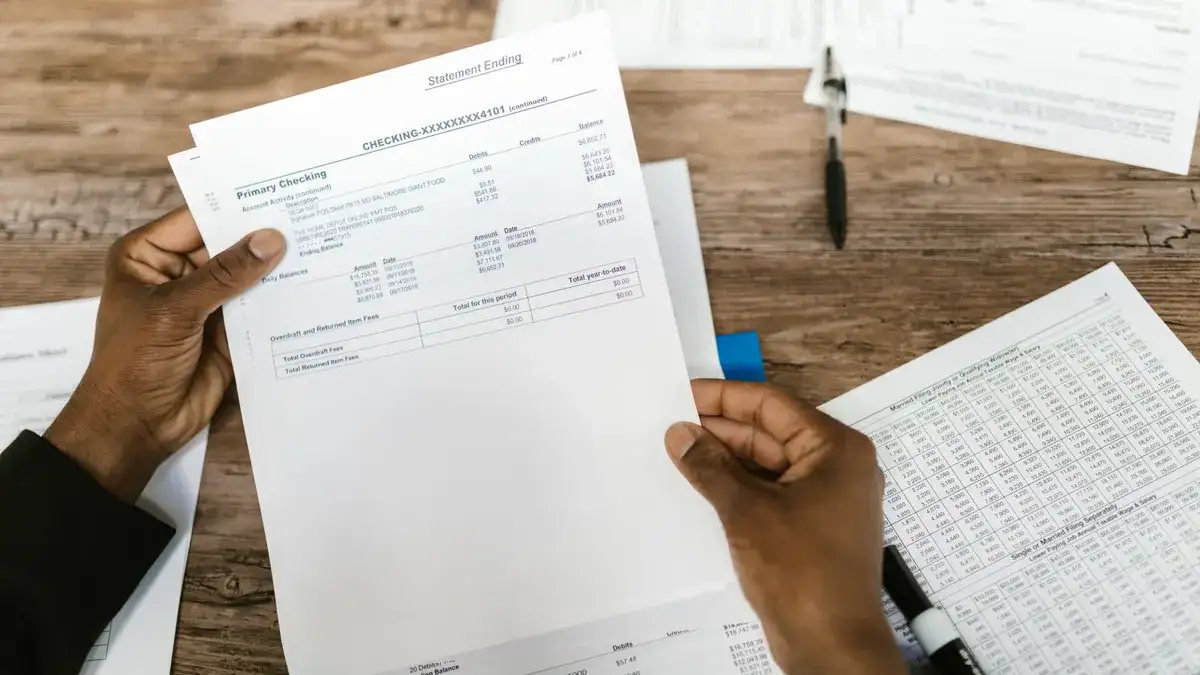
Teens should treat deductions as part of the job, not as a surprise, and they should check whether enough tax was withheld from the first paycheck. If the check was smaller than expected, taxes are one of the most common reasons.
A paycheck can include deductions for taxes, Social Security, Medicare, health coverage, retirement contributions, or other payroll items. Not every teen job has all of those. Many part-time jobs only withhold taxes. The exact mix depends on the employer, the work setup, and the forms on file.
The key idea is simple: gross pay is what you earned; net pay is what you keep after deductions. If your first paycheck was for $250 gross and the deposit was much lower, that does not automatically mean someone made an error. It may mean withholding came out, or that the check covered only part of a pay period.
For teens, the most confusing part is taxes. If you are working a summer job or a school-year job, you may owe little tax or you may have enough withheld already. The point is not to guess. The point is to check the stub and keep the records. If the job did not withhold enough, the difference may matter later when tax time comes around.
Do not spend as if gross pay were your real take-home pay. That creates a mismatch fast. If a job pays $14 an hour and the schedule looked like 10 hours, it is easy to imagine $140 arriving. But payroll deductions can make the actual deposit smaller. That gap is normal.
If you are unsure whether the withholding looks right, ask a parent, guardian, or tax professional to look at the stub with you. Tax rules can change, and the right answer depends on the forms and the work arrangement. The IRS page on tax withholding basics is a useful source for the general idea of withholding and why paychecks shrink before they reach your bank: https://www.irs.gov/payments/tax-withholding
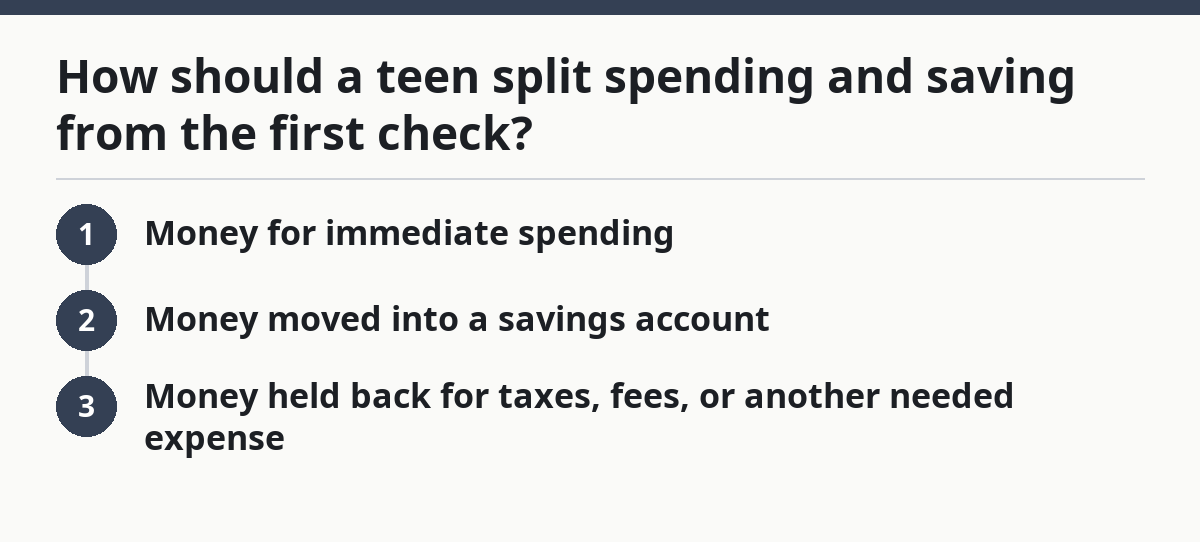
How should a teen split spending and saving from the first check?
A teen should split the first paycheck into spending and saving in a way that leaves some money usable now and some money untouched for later. The exact split does not need to be fancy to work.
A simple first-check approach is to divide the money into three buckets:
- Money for immediate spending
- Money moved into a savings account
- Money held back for taxes, fees, or another needed expense
If the paycheck is small, the saving part can still be small. Even a modest transfer into a savings account matters because it turns the first paycheck into a habit instead of a one-time event. The amount is less important than the act of separating it.
Use a real savings account if possible, not a pile of cash in a drawer. A savings account is easier to keep separate from spending money, and that separation matters when you are tempted to use everything at once. If the bank offers online transfers, move the saving portion right after the deposit clears. If the account takes a day to transfer, plan for that delay.
This is also the point where teens usually make the wrong assumption: that saving means “never spending.” It does not. The first paycheck is allowed to buy something you want, especially if you earned it. A movie ticket, a game, or a pair of headphones can fit. The mistake is turning the whole check into short-term spending and then having nothing left when a real need shows up.
Do not confuse this with building a detailed budget. That is a separate task. Here, the job is simpler: split the first paycheck so it does not vanish in one afternoon. If a teen can see money in a savings account and money available for use, the paycheck does more than pay for one weekend.
What if the paycheck came from chores instead of a job?
Chores should be treated differently from a paycheck if the work is part of family life, but a paid chore agreement can still be handled like earnings. The difference is whether the money was promised as payment or given as part of household responsibility.
If the money came from a parent for regular chores, the first question is whether it is allowance or pay. Allowance is usually not tied to a paycheck with deductions. Pay from a neighbor, local business, or formal job usually is. That matters because a true paycheck comes with a pay stub and may include gross pay, withholding, and net pay. Chore money often does not.
If chores are paid with a set amount, keep the agreement clear. A teen should know whether $20 means payment for one task, a weekly arrangement, or extra work beyond normal expectations. That matters because mixing chores, allowance, and wages can blur the value of the work. A 30-minute chore that gets paid once may not be the same as a two-hour job shift with payroll records.
The first paycheck from paid chores is a good moment to talk about what the money is for. If the payment is meant to cover something specific, such as a school trip or a phone bill contribution, the split should reflect that. If it is just spending money, it still helps to save a piece of it rather than using every dollar immediately.
One drawback of chore pay is that it can create confusion about family expectations. If every task is paid, normal household responsibility can start to feel transactional. That is not wrong in every home, but it is worth thinking through before a pattern gets set. A steady job paycheck and family chores are not the same thing, and the money should not be treated as identical just because it arrives on the same day.
Mistakes that make a first paycheck disappear too fast
A first paycheck can disappear too fast when you spend it before the deductions and work details make sense. That mistake is expensive because it leaves less money and less understanding for the next check.
The first common mistake is spending the gross amount in your head. If you assume the full hourly total is yours, you will overspend by the amount taken out for taxes or other deductions. The fix is to use the net pay figure as your real number.
The second mistake is ignoring the pay stub. That costs you the chance to catch a wrong hour count, a missed shift, or a deduction you did not expect. The fix is to review the stub on the same day you get paid and save it.
The third mistake is not keeping a small amount aside for taxes or future deductions when the job setup makes that necessary. That can leave you short later. The fix is to ask payroll or a parent what type of withholding applies and keep a little buffer until you understand the pattern.
The fourth mistake is turning the first check into a shopping event. That feels rewarding for about 10 minutes and can be frustrating for weeks if the money was needed for something practical. The fix is to wait a full day before spending on wants.
The fifth mistake is treating a paycheck like chore money or gift money. A paycheck comes with records, tax rules, and a real value tied to hours worked. That does not make it sacred, but it does make it different from casual cash. If a teen learns that difference early, later paychecks stop feeling mysterious.
For more on how teen jobs fit into the bigger money picture, the hub on teen money jobs and earnings belongs right alongside this guide.
What should a teen keep from the first paycheck for later?
A teen should keep the pay stub, the deposit record, and a simple note of how the money was split. Those three items make the next paycheck easier to understand.
The pay stub matters because it shows gross pay, deductions, and net pay. The deposit record matters because it tells you what actually hit the bank. A note matters because the first paycheck is often where you set a pattern. If you saved part of it, spent part of it, and held part of it back, the note helps you repeat what worked.
This does not need to become a full money system. A small note in your phone is enough: date, employer, gross pay, net pay, and any unusual deduction. If the next check is different by a lot, you will have something to compare it against.
Keep the records for more than one pay period if the job is seasonal or part-time. A 2-week gap can hide a payroll mistake if you never compare one check to the next. And if a parent or guardian helps with taxes, those records are useful when someone needs to explain why the money changed.
The real value of the first paycheck is not just the cash. It is the lesson that payroll has rules. Once a teen can read a stub, spot gross pay versus net pay, and split money without burning through it, the next check is much less confusing.
Why is a teen’s paycheck smaller than expected?
A teen’s paycheck is often smaller because the number earned at work is gross pay, not the amount that gets deposited. Taxes and other deductions can come out before the money reaches the bank. A pay stub shows the difference between gross pay and net pay, which is the amount actually received.
How much should a teen save from a first paycheck?
A teen should save something from the first paycheck, even if the amount is small. A practical target is a portion that does not make spending impossible and does not leave the savings account empty. The right amount depends on the check size, deductions, and any near-term needs.
What is on a pay stub?
A pay stub usually lists hours worked, gross pay, deductions, taxes, and net pay. It may also show the pay period dates and the employer’s payroll details. That information helps a teen check whether the paycheck matches the work that was actually done.
Drafted with AI; not yet reviewed by a person.