Last updated: November 20, 2026
Quick Answer: most teens can reset a forgotten teen banking app password in 3 to 7 steps through the app’s own recovery flow. How Teens Can Reset a Forgotten Teen Banking App Password usually starts with Forgot password on the sign-in screen, then a code or identity check.
A forgotten teen banking app password usually gets fixed through the app’s password reset flow, using the teen’s email address, phone number, security questions, or a parent or guardian’s linked access.
Start the reset inside the app, then verify the code or identity check that appears.
The steps below show what to tap, what should happen next, and what to do if the app locks the account.
With a linked parent, the path can shift a bit from app to app. The guide below settles the reset process, the verification step, and the common failure points.
Key Takeaways
- Start with the app’s sign-in screen, not a browser search, because the reset path usually lives behind Forgot password.
- Have the teen’s phone number, email address, and any security questions ready before you begin.
- If a parent or guardian is linked, the app may send part of the reset to the adult’s account too.
- If a code never arrives or the app keeps rejecting the check, wait, confirm the contact info, and try the official recovery path again.
- A locked account often needs a longer reset window or support help, not repeated guesses.
- Many recovery codes expire in minutes, so the reset is easier when the teen has the phone and inbox ready.
What you need before you start
You need the teen’s login screen, access to the linked phone number or email address, and enough time to finish the check without leaving the app midway. In many apps, the reset code expires in a few minutes, so stopping after step 2 can force a fresh try.
Picture a locked screen, a blank password field, and a teen who just wants back in. The shortest route is usually the recovery details the app already has on file. Usually, that means the teen’s account name, a working phone, and the email inbox tied to the profile.
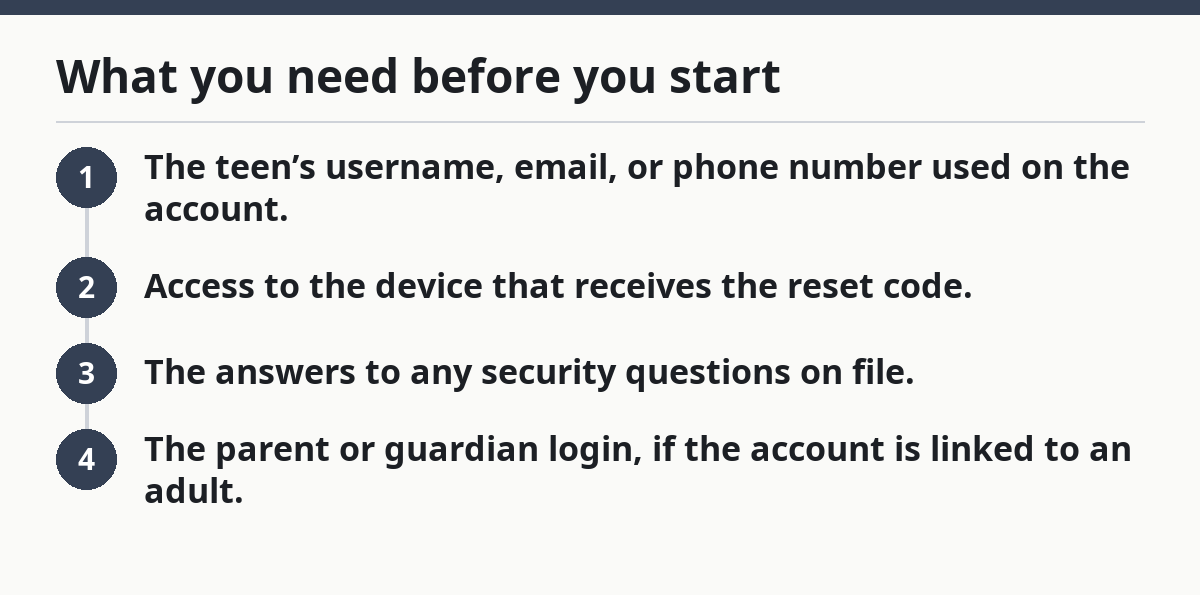
Have these ready first:
- The teen’s username, email, or phone number used on the account.
- Access to the device that receives the reset code.
- The answers to any security questions on file.
- The parent or guardian login, if the account is linked to an adult.
Miss one of those and the reset can still work, but the route may shift.
How teens can reset a forgotten teen banking app password
Teens can reset the password from the app’s sign-in page by choosing Forgot password or Reset password and then completing the identity check. That is the main route in most teen banking apps, and it usually takes just a few screens if the contact info is current.
Picture the login box lighting up with a reset code or link instead of asking for the old password. Good sign. The app has found the account and moved into recovery mode.
Follow these steps in order:
- Open the teen banking app and go to the sign-in screen.
- Tap Forgot password, Reset password, or the recovery link near the login fields.
- Enter the teen’s username, email address, or phone number when the app asks for account lookup.
- Choose the recovery method the app offers, such as text message, email message, or security questions.
- Enter the code or answer the questions exactly as shown.
- Create a new password and save it in the app.
- Sign in again with the new password to confirm the reset worked.
What success looks like: the app accepts the code or answers, shows the new-password screen, and then lets the teen sign in with the new password right away. If it loops back to the sign-in page, the reset did not stick.
A correct reset usually ends with a fresh login and a notice that the password changed. If the app asks for the old password after you already proved identity, that screen is wrong for this flow. Back out and start over from the sign-in page.
What changes when a parent or guardian is linked?
A linked parent or guardian can change the reset path by adding a second approval step, a shared contact check, or a parent-controlled recovery option. That does not always mean the adult must set the password, but it often means the app wants the adult involved in identity verification.
Picture a teen profile tied to a parent dashboard too. The app may send a code to the teen’s phone and a notice to the adult’s app or email. Two users, two permission sets — that is why teen banking setups can feel a little clunky.
Here’s what usually happens:
- The teen starts the reset from the teen profile.
- The app checks whether the linked adult must approve recovery.
- The reset code may go to the teen’s phone, the adult’s email, or both.
- The adult may need to confirm the teen account from their own banking app.
That setup can help, but it also adds friction. If the parent’s phone number changed, the recovery may stall even when the teen still knows the right email address. On the other hand, if the parent has working access, the reset may be faster than a self-serve recovery with no adult linked.
If the app says the parent must help, don’t keep trying random passwords. That can trigger a lockout. Use the adult’s access path instead.
What if the reset code never arrives?
When the reset code never arrives, check the contact method first; then request a new code after a short wait, usually a few minutes. Most failures come from a stale phone number, a full email inbox, or a message filter that hides the code.
Picture this: you tapped reset, waited, and nothing showed up. Check the exact phone number or email address the app says it sent to, because that detail matters more than the password itself.
Try these checks:
- Confirm the last 4 digits of the phone number or the full email address shown in the app.
- Check text-message spam filters, blocked senders, and the email junk folder.
- Wait a few minutes before asking for another code.
- Try the other recovery method if the app offers one.
- Make sure the phone can receive texts and the inbox is not full.
If the code still does not arrive after that, the recovery data on file may be outdated. Then the app may require support help or a different verification path.
Some apps will stop sending codes after several tries or slow the reset flow for a while. That is there to protect the account. It is also why a short pause can help more than repeated requests.
What should teens do if verification fails?
If verification fails, the teen should stop retrying the same step and switch to the app’s alternate recovery option or support channel. Repeated wrong answers can turn a simple reset into an account lockout.
Picture this: the code, the security questions, and the device check all miss. Usually, one recovery detail is off; the whole account is not gone. Now the job is to find the piece the app does not accept.
Common failure points:
- The teen uses a different phone number than the one on file.
- The email address is old or misspelled.
- The security questions were answered with extra spaces or old information.
- The linked parent account is not signed in.
- The app blocks more tries after too many failed attempts.
If the app asks for security questions, answer with the exact wording tied to the account. A nickname, a maiden name, or a school name typed one way last year may not match now. That tiny mismatch can stop the whole reset.
If the app still fails, look for a support link inside the app, not a random phone number from search results. The app’s support path can confirm whether the account needs a manual review, a new code, or a waiting period before another try. For general device and account recovery guidance, Google’s account help page and Apple’s account recovery support both explain why verification can fail and how waiting periods work. See Google Account Help and Apple Account Recovery.
How long does a teen account lockout last?
A teen account lockout usually lasts until the app’s waiting period ends or support clears the account, and the exact window depends on the bank app’s rules. Some apps block more login tries after several failed attempts, then reopen later; others require manual help right away.
Because of that, a lockout is not the same as a frozen account or a closed account. It usually means the app wants a pause, not a new application.
Picture this: too many wrong passwords and now the app won’t even let you try again. That is a lockout, and it is a safety feature. The mistake to avoid is hammering the login button, because that often makes the wait longer.
What to do instead:
- Stop trying random passwords.
- Wait for the timer the app shows, if there is one.
- Use the reset link again after the wait ends.
- Ask the parent or guardian to check whether the adult side of the account is also locked.
- Contact in-app support if the lockout has no timer or keeps returning.
If the account stays locked after the waiting period, support may need to confirm the teen’s identity before reopening access. That can take longer than a normal password reset, especially when the phone number or email on file is outdated.
How this fits with the rest of teen account safety
A password reset is one piece of teen account access, not the whole system, and it works best when the recovery details stay current. If the teen changes phones, email addresses, or the linked parent setup, the reset path should be checked again before the password is forgotten.
Picture this: the password gets fixed today, but next month the phone number changes. Then the next reset gets harder. Recovery info matters just as much as the password. If the app depends on a text code, an old number can stop you cold.
Keep these habits in mind:
- Update the teen’s phone number and email address in the app as soon as they change.
- Check whether the parent or guardian still has linked access.
- Save the new password in a trusted password manager or another secure place the teen can reach, and ask a parent, guardian, or other trusted professional if you are unsure how to store it safely.
- Make sure the teen knows which recovery path the app uses most often.
For a broader look at access and safety, the hub article on Teen Banking Account Safety and Access covers the bigger picture around teen account control.
What if the reset code never arrives?
Check the phone number or email address the app says it used, then try again after a short wait. If the inbox, text thread, or spam folder still shows nothing, the recovery contact on file may be wrong or the app may be rate-limiting new codes.
Can a parent help reset the password?
Yes, if the teen account is linked to a parent or guardian and the app allows adult approval. The parent may need to sign in, confirm the teen account, or approve the reset from their own side of the app. If the adult access is also broken, the reset can stall.
What should a teen do if the account gets locked?
Stop trying random passwords and wait for the lockout timer or support path the app shows. If there is no timer, use the app’s help or support link and have the teen’s recovery details ready. Repeated failed tries usually make the lockout last longer, not shorter.
Drafted with AI; not yet reviewed by a person.