Last updated: November 19, 2026
Key Takeaways
- A real emergency is urgent, necessary, and hard to postpone for a week or two.
- A teen should start small, then build toward a few hundred dollars if possible.
- Emergency savings should stay separate from everyday spending money.
- A teen emergency fund starts with a target, a separate place, and regular deposits until the first milestone is reached.
Quick Answer
A teen emergency fund is easiest to build by choosing a starter target, keeping it separate from spending money, and adding to it on a steady schedule.
A teen emergency fund is a small cash reserve for real surprises, not for concert tickets, fast food, or a new game. How to Build a Teen Emergency Fund Step by Step works best when the money stays separate from spending cash and gets added to on a schedule you can actually stick to.
What counts as a real emergency for a teen?
A real emergency is an unexpected expense that is urgent, necessary, and hard to delay for a week or two. That usually means a broken phone you need for school or family contact, a last-minute transit fare to get home, a required school fee that arrives with little warning, or a small medical or safety expense. It does not mean a hoodie sale, a streaming upgrade, or a night out.
That distinction matters because a teen emergency fund works only if the money is still there when a genuine problem shows up. If every uncomfortable want gets labeled an emergency, the fund becomes just another spending account.
A good test is simple: ask, “Will this matter in 7 days if I do nothing?” If the answer is yes, and the cost is necessary rather than optional, it may belong in the emergency bucket. If the answer is no, it belongs in a separate savings goal.
This is also why the emergency fund should be treated differently from short-term savings; if the teen is unsure how to separate the two, a parent, guardian, or qualified financial professional can help. Short-term savings can cover planned purchases, like a new pair of headphones in 3 months. An emergency fund is the money you do not touch unless the situation is unexpected and unavoidable. For general savings guidance, see the Consumer Financial Protection Bureau and the FDIC. Consumer Financial Protection Bureau, FDIC
A useful rule from the start: one unexpected expense is enough to justify the fund, but not enough to turn every surprise into a reason to drain it. That keeps the habit clean.
For broader teen saving and goal planning, this guide connects to the bigger picture without mixing the jobs of different savings buckets.
How much emergency savings should a teen have?
A teen should start with a small, reachable starter amount, then build toward a few hundred dollars if possible. The exact target depends on what the teen pays for and how quickly a parent, guardian, or paycheck can cover a surprise. A teen who mostly relies on adults for housing and transportation needs less than a teen who pays for rides, school supplies, or a phone bill.
The point of a starter fund is not to solve every life problem at once. The point is to create enough cash reserve that a minor crisis does not turn into panic spending or debt. For many teens, the first milestone is $100. That is enough to cover several common small emergencies without feeling impossible to reach. After that, a second milestone of $250 or $300 can give more breathing room.
I would not recommend trying to build a giant cushion first. A teen emergency fund that never gets started is worse than a small one that exists and grows. The common mistake is aiming for a number that sounds responsible but feels too large to touch. If the goal is too high, the account stays empty.
A better approach is to choose a starter amount based on one likely expense. If a phone screen repair, a replacement charger, or an unplanned ride home would strain your budget, set a goal that covers that cost first. Then add the next layer later.
This is also the place to be honest about who the advice is not for. A teen with no stable income and no way to keep money separate may need help from a parent or guardian before the fund can work. In that case, the plan is still valid, but the setup needs adult support. For money questions with legal or tax consequences, a qualified financial professional can help.
Where should a teen keep emergency savings?
A teen should keep emergency savings separate from everyday spending money, ideally in a savings account or another clearly labeled cash reserve that is not easy to swipe by accident. Separation is the main rule. If the emergency money sits in the same place as lunch money and entertainment money, it can get spent.
The safest practical setup is a simple two-bucket system:
- one place for spending
- one place for emergencies
That second bucket should be easy enough to access in a real emergency, but not so easy that a bored afternoon empties it. A savings account often fits that job well because it creates a visible break between “available now” and “do not touch unless needed.” Some families use a bank account with a separate sub-account or a labeled envelope system for cash. The right choice depends on age, banking access, and how likely the money is to be spent impulsively.
The trade-off is convenience. Cash is immediate, but it can disappear without a record. A bank account is cleaner for tracking, but it can feel less tangible and may be harder to use quickly if the teen is not set up for it. The best choice is the one that makes accidental spending harder.
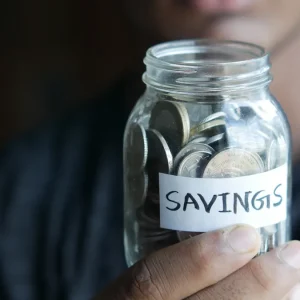
Here is the key point: the emergency fund should be easy to identify at a glance. Name it “Emergency Fund” in the account label, note, or envelope. If the label says “Savings,” the money starts to blur with everything else. If the label says “Emergency Fund,” the purpose stays clear.
When the page says “keep it separate,” that is not a slogan. It is the whole system.
Step by step: build a teen emergency fund
A teen emergency fund is built by choosing a target, opening a separate place for the money, and adding to it on a schedule until the first milestone is reached. The steps below keep the plan simple enough to use in real life.
- Pick one starter target. Choose a number such as $100, $250, or $300 based on one likely unexpected expense, then write it down somewhere visible. The result should be a target that feels clear instead of vague.
- Open or label a separate place for the money. Use a savings account, a bank sub-account, or a clearly marked cash envelope, and name it “Emergency Fund.” The result is that the money has its own home instead of floating in general savings.
- Set a fixed saving routine. Move money on the same day each week, or after each allowance or paycheck, even if the amount is small. A routine like $5 every Friday is better than waiting for a perfect month. The result is steady progress without decision fatigue.
- Automate or pre-commit if possible. If a bank transfer can be scheduled, set a recurring transfer for a specific amount, such as $10 every 2 weeks. If automation is not possible, put the transfer on a calendar reminder. The result is fewer missed deposits.
- Track the goal in plain numbers. Write “Goal: $250” and “Current: $86” on paper, in a notes app, or in a spreadsheet. The result is visible momentum, which makes the fund feel real.
- Protect the fund from small raids. Before using it, pause and ask whether the expense is urgent, necessary, and unexpected. The result is that the account stays intact for true emergencies.
- Refill it after you use it. If $40 comes out for an unexpected expense, make the next task rebuilding that $40 before adding extra spending. The result is a fund that stays useful after the first emergency.
The mistake most teens make here is skipping the routine and relying on motivation. Motivation changes by the hour; a 5-minute weekly habit does not. Another common mistake is treating the fund like a trophy and refusing to use it even when the expense is clearly an emergency. A fund that cannot be used is not much of a fund.
If the teen has irregular income, the routine still works. The transfer just has to be tied to money actually received, not to a fantasy schedule. Do not build this page around that problem; that is a different topic.
How do you separate emergency money from short-term spending?
You separate emergency money from short-term spending by giving each dollar a job before it lands in the account. One bucket is for planned purchases inside the next few months, and the other is for unexpected expenses that cannot wait. If those categories share space, the emergency fund gets drained by ordinary wants.
The cleanest method is to split incoming money immediately. For example, if a teen gets $40 from allowance or a weekend job, $10 can go to the emergency fund, $20 to a short-term goal, and $10 to spending. The exact split can change, but the labels should not. Emergency money stays emergency money.
A simple test helps when the temptation is strong: ask whether the purchase was already planned before today. If yes, it probably belongs in short-term savings. If no, and it is truly necessary, the emergency fund may be the right place. That test is useful because it removes emotion from the decision.
Another useful guardrail is physical or digital separation. Short-term savings can sit in one labeled account or envelope. Emergency money sits in another. If the funds live together, every balance looks available. If they live apart, the purpose stays clear. The format matters less than the separation.
The cost of mixing the two is slow failure. The teen may think the emergency fund is “full” because there is money in savings, then discover the money was already earmarked for shoes or a trip. That is how real emergencies turn into credit card debt, borrowing, or a stalled plan.
The fix is boring but effective: one account, one purpose, one label. Use the short-term bucket for things you expect. Use the emergency fund only for the surprise that needs money now.
What to do when you use the fund
When a teen uses the fund, the next move is to rebuild it before the account drifts into permanent emptiness. A used emergency fund is not a failure; it is proof the system worked. The problem is leaving it depleted for months.
Start by recording the withdrawal and the reason. Write down the amount, the date, and the type of emergency, such as “$28 for a replacement charger” or “$45 for a school-required fee.” That record helps distinguish real emergencies from spending that only felt urgent in the moment. It also shows whether the starter amount was too small.
Then set a refill target. If $60 came out, decide how much to return each week or each deposit. At $10 per week, the fund can recover in 6 weeks. At $20 per week, it recovers in 3. The right pace is the one that does not wreck day-to-day life.
This is also the moment to adjust the amount if needed. If the same type of expense keeps appearing, the starter target may be too low. A teen who repeatedly needs $75 for transit or school costs may need a larger cushion than a teen whose emergencies are rare and small.
One honest limitation: a teen emergency fund is not a substitute for adult help when the problem is large, unsafe, or beyond the teen’s control. A broken laptop used for school, a medical bill, or a family crisis can outgrow the fund quickly. In those situations, the fund is a first response, not the whole solution.
The most useful habit after a withdrawal is to restart the savings routine the same week. Waiting “until later” usually means never.
Keep the goal visible enough to hold your attention
A teen emergency fund works best when the goal is visible, the rule for using it is clear, and the money is kept separate from everyday spending. That combination turns a vague intention into a usable cash reserve. The mechanics are simple, but the discipline comes from repetition.
Use a visible number, a separate place, and a fixed saving routine. Track the balance in plain language. Rebuild the fund after each use. If a teen can do those four things, the account stops being an idea and starts being a tool.
A generic savings plan fails here because it treats all money the same. This plan does the opposite: it gives emergency money a narrow job and protects it from ordinary spending. That is why it works.
If the next step is planning broader money habits, the hub on teen saving and goal planning is the right place to go after this. This page stays with the emergency fund itself, because that is the job it was built to do.
How much emergency savings should a teen have?
A teen should aim for a starter amount that covers one realistic surprise, then build from there. For many teens, $100 is a useful first milestone, while $250 or $300 gives more breathing room. The right number depends on what expenses the teen may need to cover without warning.
What counts as a teen emergency?
A teen emergency is an urgent, necessary, and unexpected expense that cannot reasonably wait. A broken phone needed for school, a required school fee, or an unplanned ride home can qualify. Snacks, sales, and entertainment do not. The test is whether the cost is necessary and time-sensitive.
Where should a teen keep emergency savings?
A teen should keep emergency savings in a separate place from spending money, such as a savings account, a bank sub-account, or a clearly labeled cash envelope. The main goal is separation. If the money is too easy to spend by accident, it will not stay available when a true emergency shows up.
Drafted with AI; not yet reviewed by a person.